
7 min reading time
SaaS Onboarding Best Practices for Effective Customer Success

What You’ll Learn:
- The True Value of SaaS Onboarding: Why the first few minutes of a user’s journey are make-or-break.
- The Power of Personalization & Interactivity: How to move away from generic, “one-size-fits-all” tutorials.
- Actionable Best Practices: How to implement step-by-step roadmaps, progress tracking, and in-app live support.
- How to Deliver “Quick Wins”: Strategies for shortening your product’s time-to-value.
- A Blueprint for Structure & Measurement: How to build a onboarding checklist and track key metrics.
- Pitfalls to Avoid: The most common onboarding mistakes and how to keep your guidance focused on solving the user’s immediate problems.
A known secret: SaaS onboarding is crucial for user success. And not in a vague “nice-to-have” way, but in a make-or-break, decide-within-minutes kind of way. It’s what guides new users from “I signed up… now what?” to “Okay, I get this. This actually helps.” That’s why following onboarding best practices early really matters.
Why is it crucial, though? Well, effective customer onboarding can reduce churn rates and boost customer satisfaction, for starters. It sets the stage for a positive user experience and it often decides whether users stick around long enough to see your product’s real value.
Personalization is key. Nobody wants to feel like they’ve been dropped into a generic tutorial journey. A clear roadmap helps users understand the steps they need to take without guessing, clicking randomly, or quietly giving up.
The goal is simple: help users succeed faster, with less friction, and fewer moments of confusion.
But First: What is SaaS Onboarding?
In simple terms, when people ask what is saas onboarding, they’re asking how a product guides new customers to first value.
SaaS onboarding is the process of welcoming new users to a SaaS product—but it goes far beyond a simple “welcome.” More than just a friendly email or a product tour, SaaS onboarding is the structured journey that helps users understand your product, get value from it, and avoid abandoning it shortly after signing up.
The goal? To help users understand the features and benefits quickly. Because if they don’t “get it” early, they rarely come back later. And it’s because of it that, at its core, SaaS onboarding aims to reduce the time-to-value. In other words: how fast can a user go from signup to “this is useful”?
Key components of SaaS onboarding include:
- Setting up user accounts
- Providing tutorials and documentation
- Offering support and feedback channels
Why SaaS Onboarding Matters: Benefits & Impact
Here’s the truth: users don’t have patience for confusion anymore. If they can’t figure your product out quickly, they don’t “try harder”. They simply leave. That’s why effective SaaS onboarding is crucial for fostering user adoption and retention. It directly shapes whether customers build habits around your product or just forget it exists.
It also accelerates time-to-value, helping users reach their “aha moment” faster. That moment is where everything clicks, and where retention is basically won.
Key benefits of efficient SaaS onboarding include:
- Enhanced user satisfaction
- Reduced churn rates
- Increased user engagement
- Improved revenue potential
And there’s a bonus: happy users talk. Confused users… don’t.
Key Principles of Successful SaaS Onboarding
Successful onboarding starts with one uncomfortable truth: users don’t care about your product—they care about their problem, and how your product can help them out. A strong onboarding experience aligns with that reality.
Since users are trying to solve their own specific problems, a personalized approach isn’t just important—it’s critical. Not every user needs the same journey, the same prompts, or the same explanations. That’s why tailoring onboarding increases engagement; it feels relevant instead of repetitive.
And that’s also where interactive learning comes in. People learn in different ways. Not everyone absorbs information by reading walls of text. Some need to do, some need to see, and others need to explore at their own pace. So instead of long explanations, let users click, explore, and experiment safely.
To ensure effective SaaS onboarding, focus on these principles:
- Personalization for user relevance
- Clear and guided steps
- Interactive and engaging methods
When done well, users don’t feel “onboarded.” They just feel like the product simply makes sense.
SaaS Onboarding Best Practices
It’s time to move into the practical side. These are the patterns that consistently improve onboarding experiences across SaaS products (not in theory, but in what actually keeps users moving forward). Below are best practices for SaaS customer onboarding.
A strategic approach matters here. Random tips scattered across screens won’t cut it. Customers don’t experience onboarding as isolated features, but as a single journey. And without structure, that journey feels confusing fast.
At the core, SaaS onboarding best practices usually come down to a few key principles:
- Personalization of user experience
- Regular updates on onboarding progress
- Use of onboarding success metrics to measure results
But the real difference isn’t in listing these; it’s in how they work together. Personalization makes the experience feel relevant, progress updates give users a sense of direction, and metrics help you see where they’re getting stuck before they drop off. Taken together, these onboarding best practices create momentum without adding noise.
Timing also plays a huge role. When users are stuck, speed matters. Ideally, help needs to show up immediately. When they’re succeeding, momentum matters: you want to keep them moving without interruption.
And what about Support? Well, it shouldn’t feel like a last resort. Live chat, in-app help, and searchable resources should sit inside the experience, not outside it. The goal is to remove friction before it turns into frustration. This is one of the customer onboarding best practices SaaS companies use to reduce friction.
Ultimately, SaaS onboarding best practices aren’t about adding more steps or more guidance. They’re about one thing: helping users feel capable as quickly as possible, and then getting out of their way.
Personalize the Onboarding Experience
Generic onboarding is like a one-size-fits-all jacket: it technically works, but nobody loves it.
Every user brings different goals, expectations, and levels of experience. That’s why personalization matters so much. When onboarding feels tailored, the product stops feeling generic and starts feeling like it was built for them specifically.
Segmentation is one of the simplest ways to get there. By grouping users based on role, intent, or industry, you can shape onboarding around what actually matters to them.
Some ways to personalize onboarding include:
- Tailored welcome messages
- Custom learning journeys
- Role-specific tutorials
The more relevant the experience feels, the faster users engage, and the less likely they are to drop off.
Provide Clear Guidance and Roadmaps
Once onboarding feels personal, users still need one thing: direction.
People don’t want to explore aimlessly inside a new product. They want to know what to do first, what comes next, and how long it might take to get value.
Clear guidance removes that friction. It turns a confusing interface into something structured and manageable. A good roadmap doesn’t overwhelm users with every possible path—it simply shows the next best step.
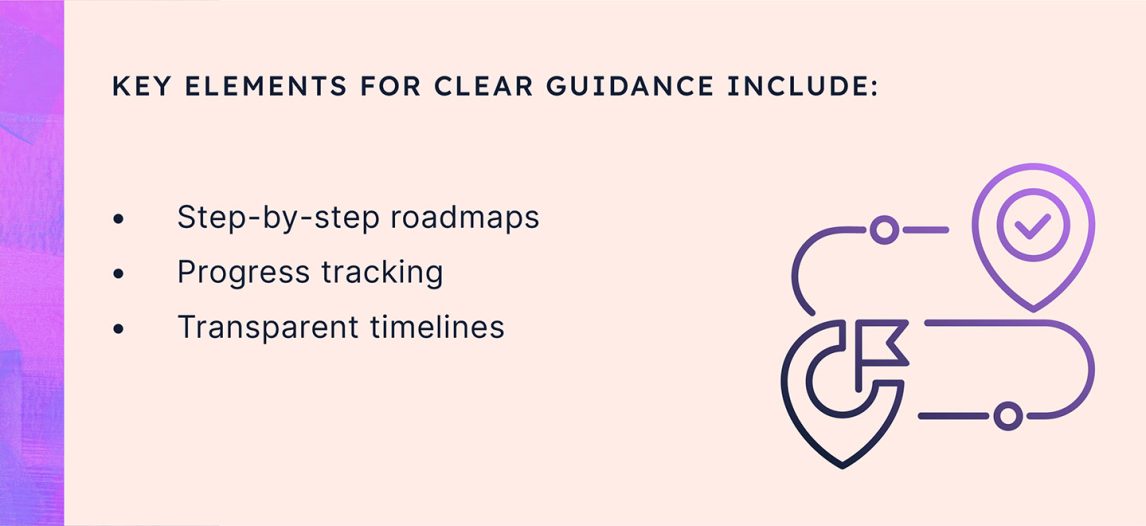
When users can see where they are and where they’re going, confidence goes up and support tickets tend to go down.
Use Interactive Tutorials and Walkthroughs
Even with clear guidance, people learn differently.
Some prefer reading, some prefer watching, and many only really understand once they start doing. That’s where interactive tutorials come in.
Instead of static instructions, users learn inside the product itself—clicking, trying, and seeing outcomes in real time. It’s more natural, more engaging, and far more effective than long explanations.
Effective interactive strategies include:
- In-app guidance
- Scenario-based learning
- Interactive video tutorials
The goal isn’t to explain everything upfront, but to help users succeed while they explore.
Communicate Effectively Throughout the Process
Onboarding shouldn’t feel silent. It also shouldn’t feel overwhelming.
Good communication sits in the middle: present enough to guide, subtle enough not to interrupt. Users need reassurance that they’re on the right track. Without it, uncertainty builds—and uncertain users tend to leave.
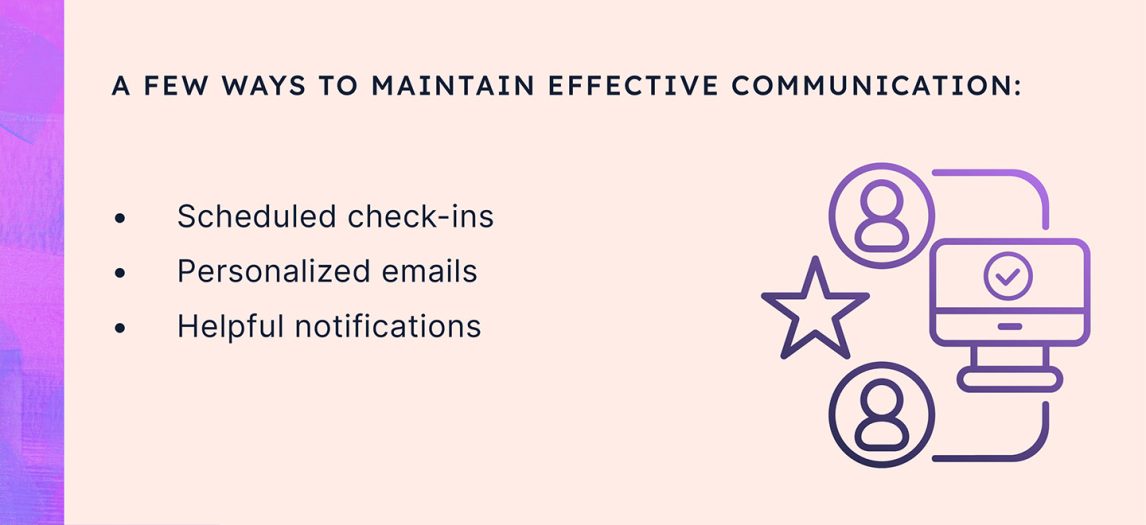
Think of communication as guardrails, not noise. It keeps users moving in the right direction without taking over the experience.
Offer Quick Wins and Early Value
If users don’t experience value quickly, they start questioning whether it exists at all. That’s why early wins matter so much: they turn hesitation into momentum and curiosity into commitment.
These wins don’t need to be big; they just need to feel real and immediate.
Examples of early value offerings include:
- Quick setup guides
- Fast-track features
- Success milestones
Once users get that first win, they’re far more likely to stick around and explore deeper functionality.
Support Users with Resources and Live Help
Even the best customer onboarding experience can’t predict everything a user will need.That’s where support comes in—not as a fallback, but as an integrated part of the experience.
Users shouldn’t have to “go find help.” Help should already be within reach.
Key support offerings can include:
- Comprehensive FAQs
- Detailed help centers
- 24/7 live chat options
Strong support builds confidence. And confident users explore more.
Building a SaaS Onboarding Checklist
Behind every smooth onboarding experience is a simple truth: someone planned it properly.
A SaaS onboarding checklist helps prevent gaps, inconsistencies, and forgotten steps. It keeps the experience structured both for users and for the team building it.
An effective onboarding checklist might feature:
- User account setup
- Initial walkthroughs or tutorials
- First goal or task completion
- Gathering initial user feedback
- Scheduling follow-up communications
Think of it as the “did we actually cover everything?” layer that keeps onboarding from turning into chaos.
Measuring Onboarding Success: Key Metrics
If you don’t measure onboarding, you’re simply just guessing. Metrics show what users actually do.
Key onboarding success metrics to track include:
- Time to first value
- Completion rates of onboarding steps
- User activation rates
- Feedback and satisfaction scores
- Drop-off points in the onboarding journey
These signals highlight where users get stuck, where they succeed, and where they quietly disappear.
Common SaaS Onboarding Mistakes to Avoid
Even strong products lose users through preventable mistakes.
The most common issues usually come down to misalignment between what users need and what they’re shown.
Common issues include:
- Skipping personalization
- Neglecting clear communication
- Failing to gather user feedback
- Overloading with features too early
The biggest mistake is trying to show everything at once. Users don’t need everything—they need the next useful thing.
Continuous Improvement: Collecting Feedback and Iterating
Onboarding is never finished. It evolves as users evolve! Feedback is what keeps it grounded in reality. Without it, onboarding becomes guesswork dressed up as strategy.
Consider the following actions:
- Conduct surveys and interviews
- Analyze support queries
- Monitor user behavior
Iterating based on feedback keeps onboarding relevant instead of outdated and shows users that their experience is actually being improved over time.
Conclusion: Driving Long-Term Success with Great Onboarding
Effective SaaS onboarding is crucial for long-term customer retention. It’s the moment where expectations meet reality and ideally turn into value. By implementing SaaS onboarding best practices, you improve satisfaction, reduce churn, and give users a real reason to stay.
But the real difference comes from consistency. Great onboarding isn’t a one-time setup, but an ongoing process of refinement.
When done well, onboarding doesn’t just teach users how to use your products. It convinces them it’s worth using in the first place!
Ready to turn your onboarding experience into a scalable growth engine?
Great onboarding is what turns first-time users into long-term customers. When done well, it reduces support overhead, accelerates time-to-value, and protects retention revenue without sacrificing the quality of the experience.
That’s where a Customer Academy comes in.